
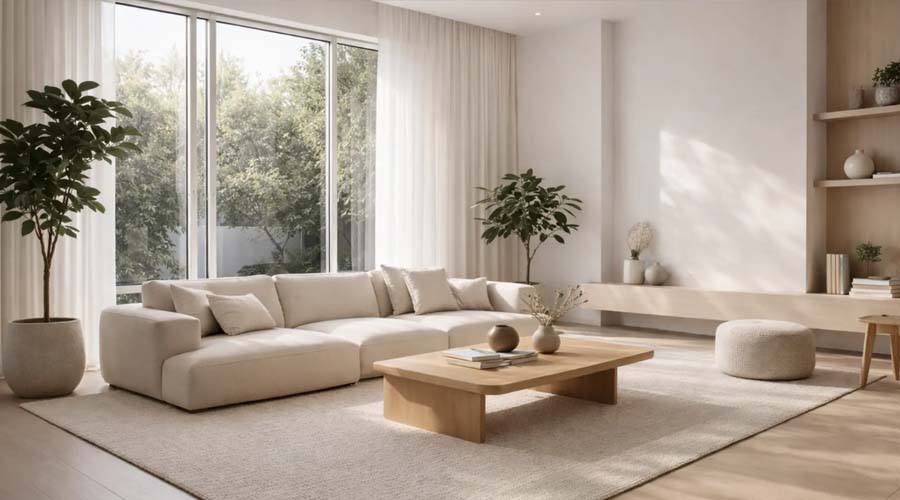
Minimalist interior design gets reduced to “less stuff” more often than it deserves, when the philosophy behind it is really about intention rather than absence. A well-executed minimalist space isn’t defined by how empty it looks, but by how deliberately every object, surface, and material choice earns its place.
What Minimalism Actually Means
True minimalism isn’t about stripping a space down to the bare minimum for its own sake — it’s about removing anything that doesn’t genuinely serve a purpose or bring value, so that what remains can be appreciated fully. A minimalist living room might have fewer pieces of furniture than a maximalist one, but each piece is chosen with more care, not less.
This distinction matters because minimalism done poorly can feel cold or unfinished, while minimalism done well feels calm and considered. The difference usually comes down to whether the reduction was thoughtful or simply an absence of decision-making.
Read more: Small Space Living: Interior Design Tricks for Compact Homes
Choosing a Restrained Color Palette
Minimalist spaces typically work from a limited, cohesive color palette rather than a wide range of competing tones. Neutral bases — whites, warm grays, soft beiges — create a calm foundation, though minimalism doesn’t require an entirely monochrome space. A single accent color or a small range of complementary tones can add warmth and personality without disrupting the sense of restraint the style is built around.
The goal is consistency rather than blandness. A minimalist palette should still feel intentional and specific to the space, not like a default choice made to avoid decisions about color.
Prioritizing Quality Over Quantity
Because a minimalist space has fewer pieces to begin with, each one carries more visual weight and needs to justify its presence more than it would in a busier room. This naturally shifts the emphasis toward quality — well-made furniture, considered materials, pieces that will still feel right in five years rather than trend-driven purchases meant to be replaced soon.
This approach often means spending more per item but buying less overall, which can result in a similar or even lower total cost compared to furnishing a space with a larger volume of lower-quality pieces.
Designing With Negative Space
Empty space is not wasted space in minimalist design — it’s an active design element in its own right. Negative space around furniture and on walls gives the eye room to rest and allows the pieces that are present to stand out rather than compete for attention. A room filled edge to edge with furniture and decor, even tasteful decor, works against the calm minimalism is meant to create.
This is part of why minimalist rooms often feel larger than their actual dimensions — the visual breathing room created by negative space reads as spaciousness, even in a modestly sized room.
Storage as a Design Priority
Minimalism only works in daily life if clutter has somewhere to go, which makes storage planning essential rather than optional. Built-in cabinetry, closed storage solutions, and furniture that hides everyday items keep a space looking clean without requiring the household to own dramatically fewer possessions than they actually need.
Without adequate storage planned into the design from the start, a minimalist aesthetic tends to break down quickly under the weight of everyday life — mail, chargers, shoes, all the small items that don’t have an assigned home.
Choosing Materials That Add Warmth
A common criticism of minimalist spaces is that they can feel sterile, and this usually comes down to material choices rather than the philosophy itself. Natural materials — wood, stone, linen, wool — introduce texture and warmth that keeps a restrained palette from feeling flat or clinical. Minimalism doesn’t require exclusively hard, cool surfaces; it simply asks that whatever materials are chosen are used with intention and consistency.
Read more: Choosing a Color Palette for Your Interior Design Project
Minimalism Doesn’t Mean Impersonal
One of the biggest misconceptions about minimalist design is that it leaves no room for personality or personal history. In practice, a minimalist space can absolutely include meaningful objects, art, or heirlooms — the discipline lies in choosing a few pieces that truly matter and giving them room to be seen, rather than surrounding them with enough other objects that they get lost in the mix.
Designing With Purpose, Not Just Restraint
Minimalist interior design succeeds when every decision — color, material, furniture, storage — is made with genuine intention rather than as an exercise in owning less for its own sake. The goal isn’t emptiness; it’s clarity, where a space feels calm and considered because nothing in it is there by accident.
At Intro Kreasi, minimalist projects are approached with the same care as any other style, ensuring every piece included earns its place rather than treating restraint as the only design decision that matters.