
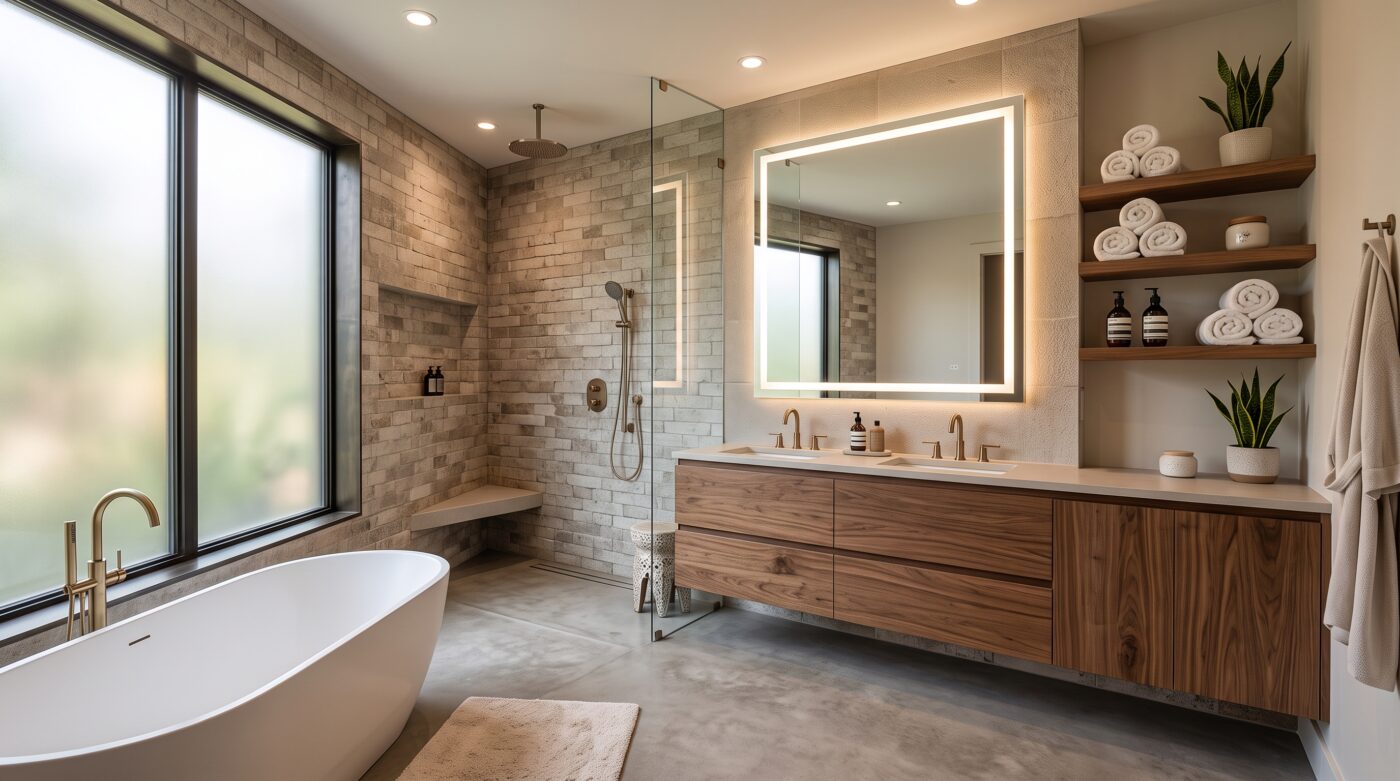
A bathroom that photographs beautifully doesn’t always work well every morning. A vanity with no storage forces toiletries onto every open surface. A shower door that swings the wrong way turns a small bathroom into an obstacle course. Poor ventilation leaves mirrors fogged and materials damp long after someone’s finished. These problems rarely show up on a design mood board. They show up every single day once the bathroom is actually in use. Bathroom interior design has to solve daily function first. Style gets layered on top of that.
What Is Bathroom Interior Design?
Bathroom interior design plans the layout, materials, storage, and lighting inside a bathroom. The goal is a room that holds up to constant water exposure and daily use. It covers fixture placement, from the shower to the vanity to the toilet. It covers how much space each fixture actually needs to function well. It also covers storage that keeps everyday items accessible without cluttering the counter. Material choices matter too, since bathroom surfaces face more moisture and wear than almost any other room in the house. Good bathroom design treats these functional demands as the starting point, not an afterthought.
Real Benefits and Impact
A well-planned bathroom layout removes the small frictions that build up over time. Enough counter and storage space means fewer items crowding the sink every morning. A shower door or curtain that opens without hitting the vanity makes a small bathroom feel far less cramped. Proper ventilation keeps mold and mildew from building up in grout and corners. That protects both the room’s appearance and its materials over time. Good lighting near the mirror also makes everyday tasks like shaving or applying makeup noticeably easier. A single overhead fixture rarely provides that on its own.
Evidence and Reference Standards
Bathroom materials need to meet a higher moisture-resistance standard than materials used elsewhere in a home. Non-slip flooring matters for safety, particularly in a household with children or older family members. Proper waterproofing behind tiled walls and under flooring prevents water damage. That damage can otherwise go unnoticed for years before it surfaces as a much larger repair. Ventilation standards also matter more in a humid climate like Indonesia’s. A bathroom without adequate airflow struggles to fully dry out between uses.
After the Project: What to Prepare
Once a bathroom renovation is complete, give sealants and grout the full curing time before regular use. Moisture exposure too early can weaken both. Keep a note of which cleaning products suit the specific finishes used. Some natural stone and custom surfaces need gentler care than standard bathroom cleaners provide. It also helps to test the ventilation fan and drainage under normal daily use during the first week. Any adjustment needed gets caught early this way, rather than after months of use.
What to Realistically Expect
A well-designed bathroom won’t eliminate all maintenance. Any wet room needs regular cleaning and occasional resealing over time. What good design does deliver is a room that’s easier to keep clean. It’s also far less prone to the mold, clutter, and awkward layout issues that plague poorly planned bathrooms. Most homeowners notice the difference immediately in daily use, particularly around storage and morning routines. The durability benefits of proper waterproofing tend to become clear over the following years, not right away.
Ready to Redesign Your Bathroom?
If your bathroom isn’t working as well as it looks, Intro Kreasi designs and manufactures custom bathroom furniture for homes across Indonesia from our workshop in Surabaya. Read also: Kitchen Layout Ideas for an Efficient Home Design Project and Small Space Living: Interior Design Tricks for Compact Homes for more on getting the rest of your home’s functional rooms right. Reach out through our contact page or WhatsApp at +62 813-2677-7097 to talk through what your bathroom needs.