
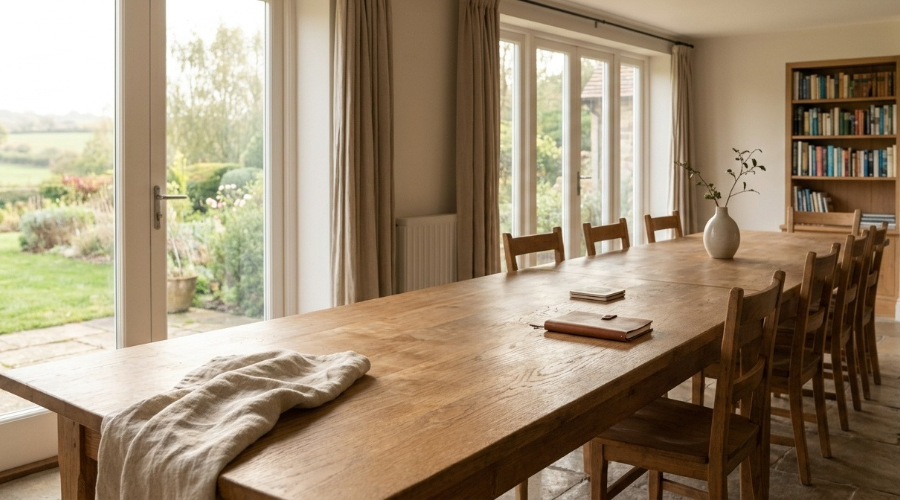
A new wooden table looks perfect on delivery day. Six months later, a white ring marks where a hot cup sat. Sunlight fades one side of the finish. A cabinet door sticks after a week of heavy rain. Most of this damage is avoidable. Wooden furniture care doesn’t need special products or hours of effort. It needs a few habits that match your finish and your climate.
What Does Wooden Furniture Care Involve?
Wooden furniture care covers how you clean, protect, and position wooden pieces so they age well. Wood is a natural material. It absorbs and releases moisture, reacts to heat, and responds to light. The right care depends on the finish. Oiled wood needs different treatment from lacquered wood, and laminate surfaces need something else again. Check the care sheet from your maker before you pick a cleaning product.
Real Benefits and Impact
Good care keeps furniture looking newer for longer. It protects the finish from stains, heat marks, and fading. It also cuts the number of repairs you need. A few small habits prevent most of the damage people notice. Use coasters, wipe spills quickly, and keep pieces out of direct sun. Over several years, the gap between cared-for and neglected furniture grows large. Well-kept solid wood even develops a richer character with age.
Evidence and Reference Standards
Wood moves with humidity. It swells in damp air and shrinks in dry air. In Indonesia’s tropical climate, steady ventilation helps, and so does keeping furniture away from damp walls. Air conditioning vents and direct sunlight both cause uneven drying and fading. Finish type matters as well. Lacquer and polyurethane form a protective film, so you wipe them clean but don’t oil them. Oil and wax finishes soak into the wood and need occasional reapplication. Termites are also a real risk in the tropics. Look for fine powder or tiny holes, and call a pest professional early.
After the Project: What to Prepare
Build a simple routine around your new furniture. Dust weekly with a soft, dry cloth. Wipe spills right away, then dry the spot. Use a damp cloth, never a wet one, for sticky marks. Put coasters under cups and trivets under hot dishes. Lift pieces instead of dragging them, and fit felt pads under legs. Leave a small gap between furniture and walls so air can circulate. Avoid harsh or abrasive cleaners. Reapply oil or wax on the schedule your maker recommends.
What to Realistically Expect
Care slows wear, but it can’t stop it. Wood shows small marks over time, and its color shifts as it ages. Minor scratches on oiled pieces often refresh with a light treatment. Deeper damage on lacquered surfaces usually needs a professional. Set realistic expectations. Well-kept pieces last for many years, and they still age. That aging is part of what makes real wood worth owning.
Ready to Build Furniture for Your Space?
If you want furniture built for your room and your climate, Intro Kreasi designs and manufactures custom pieces in our Surabaya workshop. Read also: Solid Wood vs Plywood: Which Is Better for Custom Furniture? and Custom Furniture Manufacturing vs Off-the-Shelf: What Commercial Projects Actually Need for more on choosing the right pieces. Reach out through our contact page or WhatsApp at +62 813-2677-7097 to talk through what your project needs.