
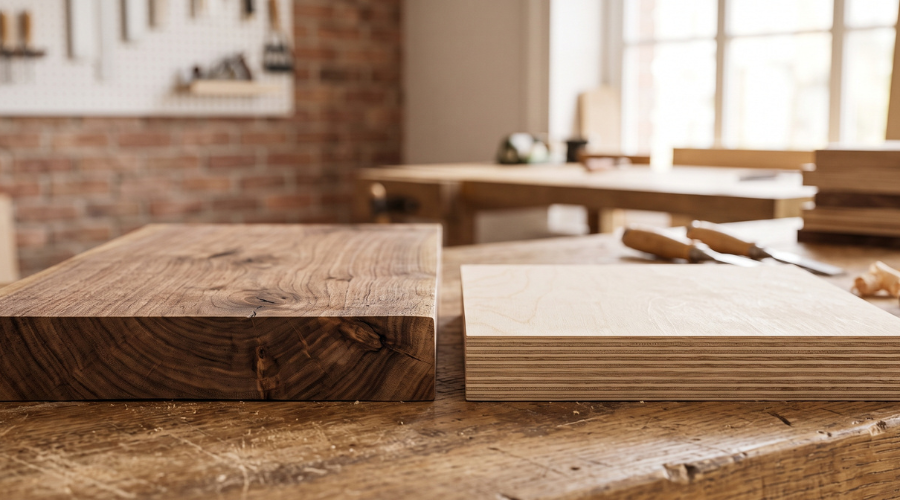
Ask three furniture makers whether solid wood or plywood is better, and you’ll get three different answers. Both materials earn their place. The wrong choice shows up later. A solid wood door swells in the rainy season and starts to stick. A cheap plywood cabinet sags under the weight of everything stored inside. Solid wood vs plywood isn’t a question of premium versus budget. It’s a question of which material suits the piece, the room, and the climate.
Solid Wood vs Plywood: What Actually Differs?
Solid wood is timber cut straight from the tree, with no layers or fillers. Plywood stacks thin wood veneers and glues them together. Each layer’s grain runs at ninety degrees to the next. That cross-layer build gives plywood its stability. Solid wood moves more as humidity changes. It also offers real depth. You can sand it, refinish it, and repair it for decades. Plywood usually carries a surface finish such as veneer, laminate, or paint. What you see is the skin of the board, not its full thickness.
Real Benefits and Impact
Solid wood suits pieces that people see and touch every day. Dining tables, chair frames, and statement doors all show off its grain and strength. It lasts a long time, and a skilled finisher can bring a worn surface back to life. Plywood shines on large flat panels. Wardrobes, cabinet boxes, and shelving stay flat and resist warping better than wide solid boards. It also weighs less, which makes installation easier. For hotels or offices with many identical pieces, plywood gives consistent sizes and a predictable result. Many of the best pieces combine both. A solid wood frame or edge wraps a plywood panel.
Evidence and Reference Standards
Wood absorbs and releases moisture, and it swells and shrinks across the grain as it does. This matters in Indonesia’s humid climate, where timber needs proper drying before it becomes furniture. Plywood quality varies widely. Three things decide it: the grade of the face veneer, the quality of the core, and the type of glue. Kitchens and bathrooms call for moisture-resistant glue. Ask your manufacturer for the grade and glue specification instead of accepting a general promise. Termites are also a real risk in the tropics. Ask whether the timber or board has had protective treatment.
After the Project: What to Prepare
Give new solid wood pieces a few weeks to settle into the room before judging them. Keep them away from direct sun and standing water. Wipe spills quickly. Solid wood usually needs occasional oiling or waxing, while laminate surfaces need only a damp cloth. In wet areas, check that exposed plywood edges stay sealed. Keep the manufacturer’s care sheet and material specification on file. These help if you need a repair or a matching piece later.
What to Realistically Expect
No material is perfect. Solid wood can show small seasonal movement or hairline gaps at joints. Its grain also varies from piece to piece, which is part of its character. Plywood edges and surface finish matter a great deal, since lower grades can chip or show small voids. A good workshop explains these trade-offs honestly. It often recommends a mix of both materials for one project. Solid wood generally costs more per piece, but the right plywood with a quality finish can look excellent and last for years.
Ready to Choose the Right Material?
If you’re unsure which material suits your project, Intro Kreasi’s team can talk through the options and build the piece in our Surabaya workshop. Read also: Custom Furniture Manufacturing vs Off-the-Shelf: What Commercial Projects Actually Need and Mixing Textures and Materials in Interior Design Projects for more on getting materials right. Reach out through our contact page or WhatsApp at +62 813-2677-7097 to talk through what your project needs.