Office interior design trends have shifted noticeably as companies rethink what a workplace needs to offer now that hybrid work has become the norm rather than the exception. An office today has to earn the commute, offering employees something a home setup simply can’t replicate. That shift is reshaping how offices are planned, from the materials chosen to the way space is divided between focus work and collaboration.
Designing for Hybrid Work, Not Fixed Desks
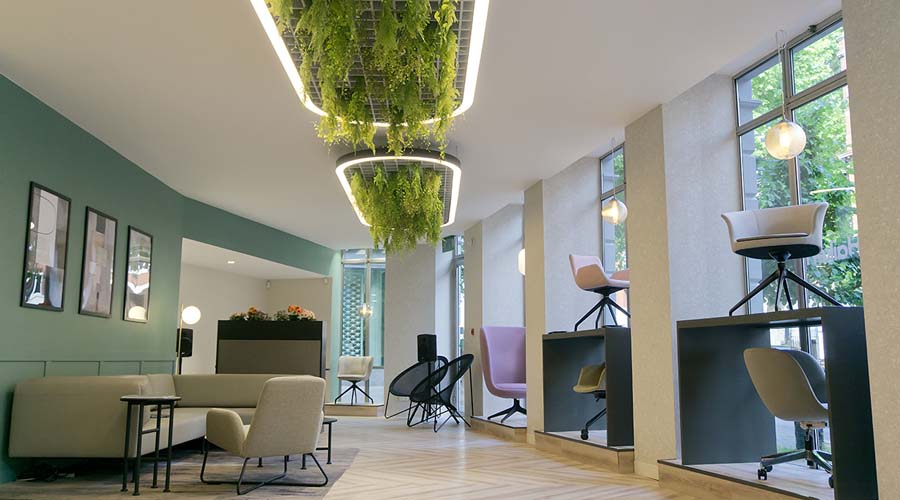
Rather than rows of identical desks, the most effective modern offices increasingly resemble hospitality venues, offering varied seating zones, informal social hubs, and quiet retreats that employees can choose based on what they’re doing that day. Instead of one fixed desk for eight hours, layouts now support movement between settings depending on whether the task calls for a quick call, focused solo work, or a team brainstorm. This kind of flexibility also makes an office easier to adapt as a team grows or its working patterns change, without requiring a full renovation each time.
Ergonomics has also expanded well beyond a comfortable chair. Height-adjustable desks, mobile furnishings, and zones designed to work together as an ecosystem now play a bigger role, since fewer employees are tied to a single workstation for the entire day.
Acoustic Design Is No Longer an Afterthought
Poor acoustics remains one of the most common workplace complaints, and this has pushed acoustic design into becoming a central consideration rather than something addressed at the very end of a project. Many offices are moving away from fully open layouts in favor of an acoustically considered approach that balances open collaboration areas with genuinely quiet spaces for focused work—an adjustment that matters more than ever given how much of the workday now happens over video calls that need a controlled sound environment.
Biophilic Design as a Structural Element
Biophilic design—incorporating greenery, natural light, organic materials, and nature-inspired tones—continues to be one of the trends with the clearest link to occupant wellbeing and productivity. The strongest examples don’t treat this as decoration added at the end, but build it into the structure of the space itself, from how daylight moves through a floor plan to the materials used on major surfaces. Even small interventions, like positioning workstations to make the most of window light or choosing textured natural materials for high-touch surfaces, can shift how a space feels without requiring a major renovation budget.
Sustainability as a Baseline Expectation
Sustainable practice is increasingly treated as a baseline requirement rather than an optional upgrade. This shows up clearly in material choices, with a growing preference for materials that age visibly and honestly rather than composites that mask their components, along with assemblies designed to be taken apart and reused rather than discarded at the end of a fit-out’s life. The broader goal is keeping materials in circulation longer and reducing waste at end-of-life.
Read more: Choosing a Color Palette for Your Interior Design Project
Color and Sensory Experience Take a More Thoughtful Approach
Color use in offices is also becoming more deliberate. Rather than bold brand colors dominating every surface, many projects now favor a more restrained, strategic use of color tied closely to brand identity rather than applied indiscriminately. Lighting follows a similar shift toward intention, with adaptive systems adjusting brightness and warmth to match different times of day and different types of work.
Applying These Trends Thoughtfully
Not every trend suits every workspace, and the most effective office designs tend to selectively apply these ideas based on how a specific team actually works, rather than following every trend at once. A software company running mostly async, focus-heavy work has very different acoustic and layout needs compared to a sales team that thrives on constant collaboration. The starting point should always be how the space is actually used day to day, with these trends applied as tools to support that reality rather than as a checklist to complete.
At Intro Kreasi, office projects begin with understanding how a team works before any material or layout decision is made, ensuring the trends applied genuinely serve the people using the space rather than simply following what’s current.