
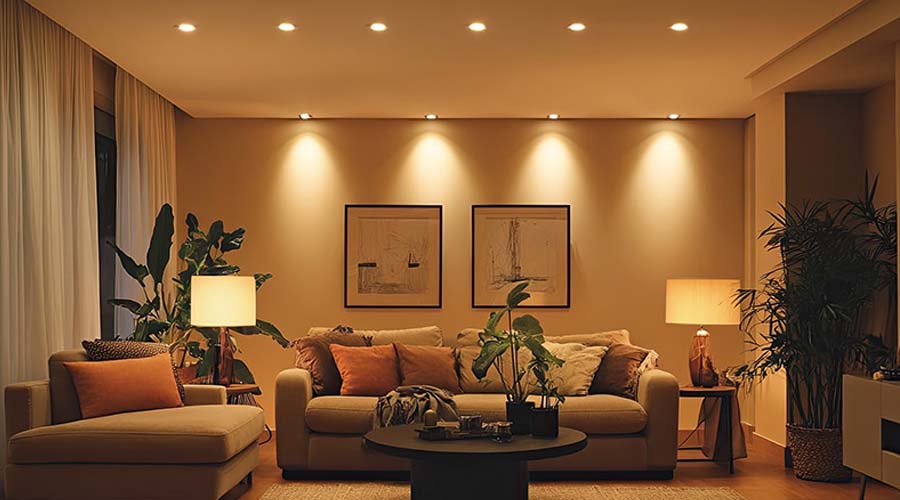
Lighting design interior work often gets treated as an afterthought, something decided once furniture and paint colors are already settled, when it should really be one of the earliest decisions in a project. Good lighting shapes how a space feels far more than most people realize, and the difference between a flat, single-source-lit room and a thoughtfully layered one is often more noticeable than any single piece of furniture.
The Three Layers of Lighting
Effective lighting design generally works with three distinct layers rather than a single overhead source. Ambient lighting provides the general, overall illumination in a room — ceiling fixtures, recessed lights, or natural light through windows — and sets the baseline brightness for the space. Task lighting targets specific activities that need focused light, like reading, cooking, or working at a desk, and typically comes from sources like desk lamps, under-cabinet lighting, or pendant lights over a kitchen island.
Accent lighting adds depth and visual interest by highlighting specific features — artwork, architectural details, a favorite bookshelf — rather than illuminating the room generally. A room using only one of these layers, most commonly just ambient lighting, tends to feel flat and one-dimensional no matter how well everything else is designed.
Read more: Kitchen Layout Ideas for an Efficient Home Design Project
Lighting the Living Room
Living rooms benefit from all three layers working together, since the space typically serves multiple functions throughout the day — relaxing, entertaining, watching television, reading. Ambient lighting from ceiling fixtures or floor lamps provides general coverage, while table lamps and floor lamps positioned near seating areas offer task lighting for reading. Accent lighting, such as a picture light over artwork or LED strips behind a media console, adds the layer of visual interest that keeps the room from feeling one-note in the evening.
Dimmers are particularly valuable in living rooms, allowing the same space to shift from bright and functional during the day to soft and relaxed for an evening in.
Lighting the Kitchen
Kitchens demand more task lighting than almost any other room, given the amount of precise, close-up work that happens at counters and the stove. Under-cabinet lighting is one of the most effective additions here, illuminating the counter surface directly without the shadows that overhead lighting alone tends to create when you’re standing directly beneath it.
Pendant lights over an island or dining area add both task lighting and a visual anchor to the space, while general ambient lighting from recessed fixtures fills in the rest of the room evenly.
Lighting the Bedroom
Bedrooms benefit from softer, warmer lighting overall, given their role as a space for winding down rather than high-energy activity. Bedside lamps offer essential task lighting for reading in bed, ideally positioned so light doesn’t disturb a partner who’s already asleep. Overhead lighting is worth keeping relatively soft or dimmable here, since bright, cool-toned overhead light can work against the relaxed atmosphere a bedroom is meant to support.
Lighting the Bathroom
Bathrooms need bright, even, shadow-free lighting around the mirror in particular, since this is where most detailed tasks — shaving, makeup, skincare — actually happen. Lights positioned on either side of the mirror at face height generally work better than a single fixture directly overhead, which tends to cast unflattering shadows across the face.
Layering in softer ambient lighting elsewhere in the bathroom, separate from the bright task lighting at the mirror, allows the space to feel less clinical when you don’t need the full brightness — during a relaxed bath, for instance.
Color Temperature Matters as Much as Brightness
Beyond the three layers, color temperature — how warm or cool a light appears — plays a significant role in how a space feels. Warmer light, generally in the range of 2700K to 3000K, tends to feel cozy and relaxed, making it well suited to living rooms and bedrooms. Cooler light, closer to 4000K and above, feels more energizing and clinical, which suits task-heavy spaces like kitchens and home offices better than social or restful ones.
Mixing warm and cool light within the same room, even unintentionally, can create a visually jarring effect, so it’s worth choosing a consistent color temperature within each layer of a space’s lighting plan.
Read more: Choosing a Color Palette for Your Interior Design Project
Designing Light Alongside Everything Else
The most effective lighting design isn’t decided after the furniture and finishes are chosen — it’s planned alongside them, considering how each room will actually be used throughout the day and evening. A well-lit space doesn’t need to be an afterthought fixed with a lamp here and there; it can be one of the most transformative decisions in the entire design.
At Intro Kreasi, lighting is considered from the earliest stages of a project, planned in tandem with layout and material choices so every room has the right balance of ambient, task, and accent light for how it will actually be lived in.