
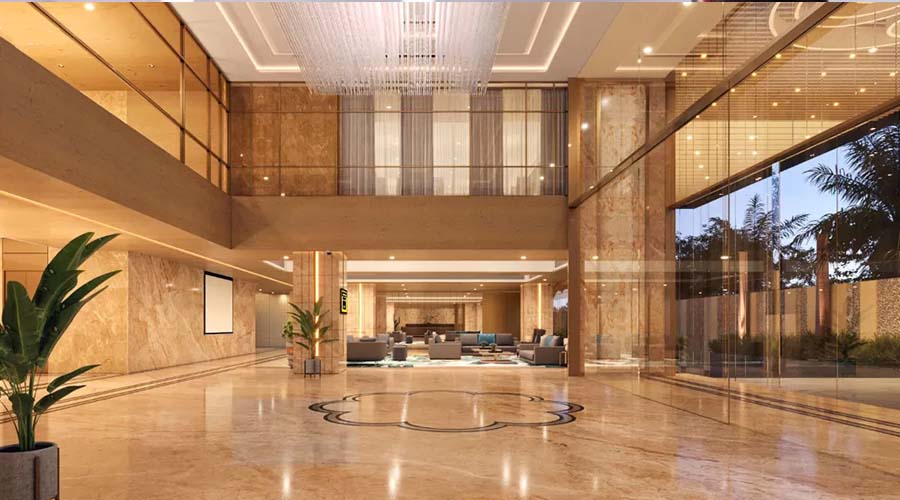
Hotel lobby design carries more weight than almost any other space in a hospitality project, simply because it’s the first thing a guest experiences and often the moment that sets the tone for their entire stay. Within seconds of walking through the entrance, a guest forms an impression of the property’s quality, character, and attention to detail, long before they’ve even reached the front desk.
Setting the Tone from the Entrance
The transition from outside to inside plays a bigger role in a lobby’s impact than many people expect. A well-considered entrance sequence—the approach, the doorway, the first sightline into the space—builds anticipation before a guest even steps fully inside. Lighting plays a particularly important role here, since the shift from natural daylight to interior lighting needs to feel intentional rather than abrupt, easing guests into the space rather than jarring them with harsh contrast.
Scent and sound are often overlooked but contribute just as much to a first impression as the visual design. A signature scent or a carefully chosen ambient soundtrack can reinforce a property’s identity in ways that guests may not consciously notice but will still feel.
Read more: Office Interior Design Trends for Modern Workspaces in 2026
Balancing Grandeur with Warmth
Many hotel lobbies aim for a sense of grandeur, but the most memorable ones pair that scale with genuine warmth rather than leaving guests feeling like they’ve walked into an empty showroom. High ceilings and dramatic architectural features can coexist with comfortable seating areas, soft textiles, and lighting that feels inviting rather than clinical. The goal is a space that photographs beautifully but also feels genuinely welcoming to sit in while waiting for check-in.
Material choices carry a lot of this responsibility. Stone and marble can communicate quality and permanence, while wood and textiles introduce warmth that keeps a grand space from feeling cold or unapproachable. The most successful lobbies tend to layer these materials thoughtfully rather than leaning entirely on one or the other.
Designing for Function, Not Just First Impressions
A lobby has to work as hard functionally as it does visually. Clear sightlines to the front desk help guests orient themselves quickly after a long journey, reducing the small moments of confusion that can undercut an otherwise strong first impression. Seating areas need to serve multiple purposes—waiting for check-in, meeting someone, or simply pausing before heading to a room—without feeling like an afterthought squeezed into leftover space.
Traffic flow deserves particular attention in busy properties, where luggage trolleys, arriving guests, and staff all need to move through the same space without congestion. A visually striking lobby that creates bottlenecks during peak check-in times undermines the very impression it’s meant to create.
Reflecting Brand Identity Through Design
A hotel lobby is one of the clearest expressions of a property’s identity, and the design choices made here should reflect what the brand promises elsewhere in the guest experience. A boutique property built around intimacy and local character calls for a very different lobby than a large-scale business hotel designed around efficiency and polish. Consistency between the lobby and the rest of the property matters, since a disconnect between a striking entrance and a more ordinary guest room can leave visitors feeling like the design promise wasn’t fully delivered.
Local context often strengthens this identity further. Incorporating regional materials, craftsmanship, or design references gives a lobby a sense of place that a generic, could-be-anywhere design simply can’t replicate.
Read more: Choosing a Color Palette for Your Interior Design Project
Designing a Lobby That Lasts
A well-designed lobby needs to hold up to years of daily wear from guests, luggage, and constant foot traffic without losing its visual impact. Durable, high-quality materials chosen with this in mind pay off over the life of the property, reducing the need for premature refreshes that can disrupt operations and blur the original design intent.
At Intro Kreasi, hotel lobby projects start with understanding both the brand story a property wants to tell and the practical flow it needs to support, so the finished space makes a strong first impression without sacrificing how well it actually functions day to day.