
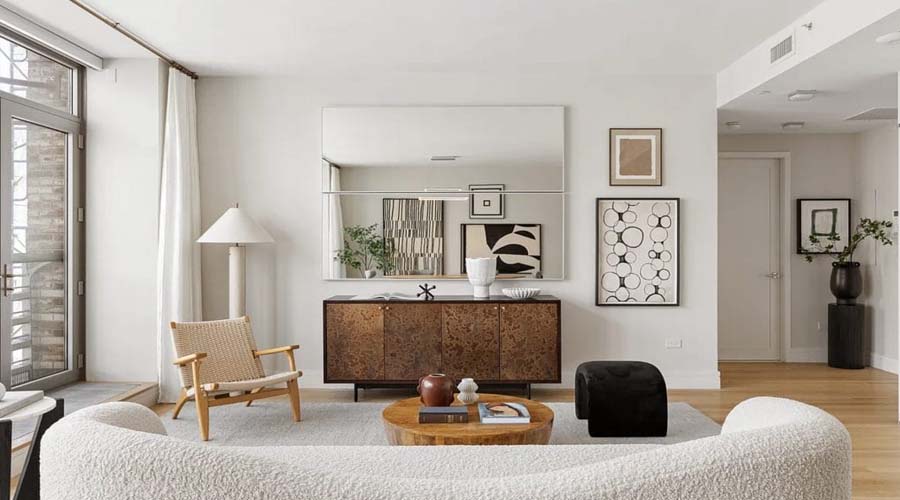
Mixing textures and materials is one of the most reliable ways to keep a room from feeling flat, even when the color palette itself is fairly simple. A space built entirely from smooth, similar surfaces can end up feeling sterile no matter how well the colors work together, while a thoughtful mix of textures adds the visual and tactile depth that makes a room feel finished rather than just decorated.
Why Texture Matters as Much as Color
Color tends to get most of the attention in design conversations, but texture is what gives a room its sense of depth and dimension. A neutral, monochromatic room can still feel rich and layered if it combines materials like linen, wood, and stone, because each surface catches and reflects light differently. Without that variation, even a well-chosen color scheme can end up feeling one-dimensional.
Texture also plays a practical role in how a space feels to be in, not just how it looks. Soft textiles underfoot or against skin create comfort, while harder surfaces like stone or metal introduce a sense of structure and permanence. The interplay between the two is often what makes a room feel genuinely comfortable rather than simply photogenic.
Read more: Hotel Lobby Design: Creating a Memorable First Impression
Balancing Rough and Smooth
One of the simplest principles for mixing textures successfully is pairing rough, organic surfaces with smooth, refined ones. A raw wood coffee table alongside a sleek glass or polished metal side table creates contrast that keeps both pieces from feeling flat. The same principle applies to smaller details, like pairing a nubby wool throw with smooth leather upholstery, or rough plaster walls against polished concrete flooring.
Without this contrast, an all-rough material palette can start to feel heavy and unrefined, while an all-smooth palette often reads as cold or impersonal. The tension between the two textures is what keeps a space feeling balanced rather than tipping too far in either direction.
Layering Materials Without Overwhelming a Space
Mixing textures doesn’t mean using every material available in a single room. A useful approach is choosing two or three dominant materials as anchors—wood, stone, or metal, for example—and then introducing softer textiles like linen, wool, or cotton as the layer that ties everything together. Too many competing materials in one space can quickly start to feel chaotic rather than intentional, especially in smaller rooms with less visual breathing room.
Repetition helps here too. Echoing the same wood tone or metal finish across a few different pieces in a room, rather than introducing an entirely new material with each item, keeps a mixed-texture space feeling cohesive rather than assembled from unrelated parts.
Considering Scale and Placement
Where textures are placed matters as much as which ones are chosen. Large surfaces like flooring and walls set the overall tone of a room, so it’s usually worth committing to those choices first before layering in smaller textural details through furniture, textiles, and accessories. Smaller textured pieces—a woven basket, a textured ceramic vase, a patterned rug—are easier to swap out over time, making them a lower-commitment way to experiment with texture without repainting or re-flooring an entire space.
Scale also plays into how texture reads in a room. A heavily textured material used across a large surface, like a rough stone accent wall, can feel dramatically different from the same texture used sparingly on a single accent piece, so it’s worth considering how much visual weight a given texture will carry before committing to it at scale.
Read more: Office Interior Design Trends for Modern Workspaces in 2026
Bringing It All Together
The goal of mixing textures and materials isn’t to fill a room with variety for its own sake, but to create a sense of depth that a single-material space simply can’t achieve. Starting with an anchor material, layering in contrast through a mix of rough and smooth surfaces, and staying intentional about repetition and scale helps a space feel considered rather than accidental.
At Intro Kreasi, material and texture choices are considered from the earliest stages of a project, developed alongside the layout and color palette so that every surface in a space works together as part of one cohesive design.