
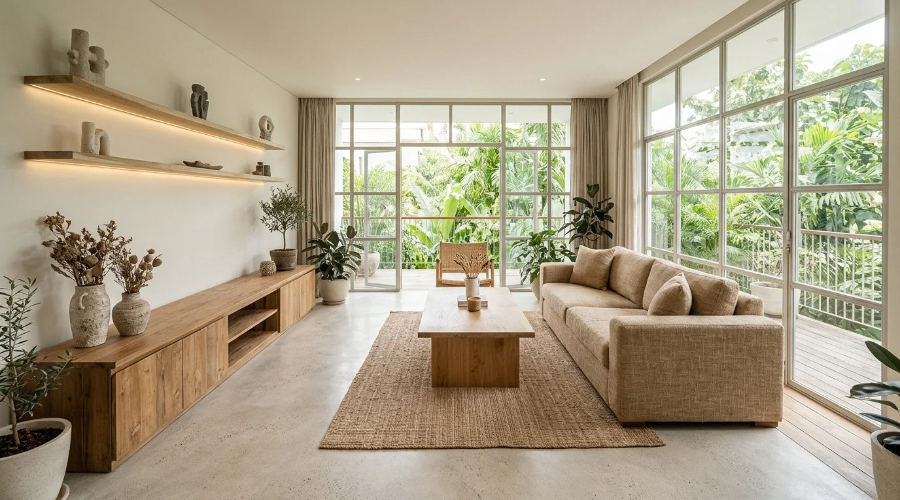
Sustainability in interiors often sounds like a label stuck on a product. In practice, it comes down to decisions made early. A sofa replaced after three years creates more waste than one that lasts fifteen. A custom cabinet that fits exactly leaves fewer offcuts than a standard one forced into the space. Sustainable interior design isn’t a trend to follow or a premium to pay. It’s a way of choosing materials, layouts, and furniture so a space needs fewer replacements. It starts with durability.
What Is Sustainable Interior Design?
Sustainable interior design reduces a project’s environmental impact across its whole life. That includes the materials you choose, how the furniture gets made, how much energy the space uses, and how long everything lasts. It doesn’t depend on special products alone. Often it simply means choosing well, building to last, and avoiding waste.
Real Benefits and Impact
Durable choices cut replacement costs. Rooms that use daylight and efficient lighting draw less electricity. Furniture made to measure wastes less material than pieces forced to fit. Low-emission finishes help keep indoor air cleaner. Many sustainable choices also save money over time, even when the upfront cost runs slightly higher. A space built to last also stays fresh longer, because quality materials age better than cheap ones.
Evidence and Reference Standards
Several recognized references help you check claims. Timber certification, such as FSC internationally and Indonesia’s SVLK timber legality system, shows that wood comes from a legal and responsibly managed source. Ask your supplier for documents instead of accepting a verbal promise. Low-VOC paints and finishes release fewer volatile organic compounds into indoor air. LED lighting uses far less energy than older bulbs and lasts much longer. Be cautious with vague words like “eco-friendly.” Without certification or documentation, they mean little.
After the Project: What to Prepare
Sustainability continues after handover. Keep the care instructions and maintain furniture so it lasts. Repair instead of replacing whenever you can. Choose gentle cleaning products. Keep spare parts and finish samples on file, so a repair matches the original. When a piece finally reaches the end of its life, ask whether someone can refinish it, repurpose it, or take it as a donation before you throw it away.
What to Realistically Expect
No project is perfectly sustainable. Trade-offs always exist. A certified material may cost more or take longer to source. A durable finish may need more energy to produce. The goal is better choices, not a perfect score. Focus on the decisions with the biggest effect. Pick durable materials, right-sized furniture, and efficient lighting. Aim for a design that still feels current in ten years.
Ready to Plan a Project That Lasts?
If you want a space built to last, Intro Kreasi designs and manufactures custom interiors from our Surabaya workshop. Read also: Mixing Textures and Materials in Interior Design Projects and Lighting Design Basics for Every Room in Your Home Interior for more on choosing materials and lighting well. Reach out through our contact page or WhatsApp at +62 813-2677-7097 to talk through what your project needs.