
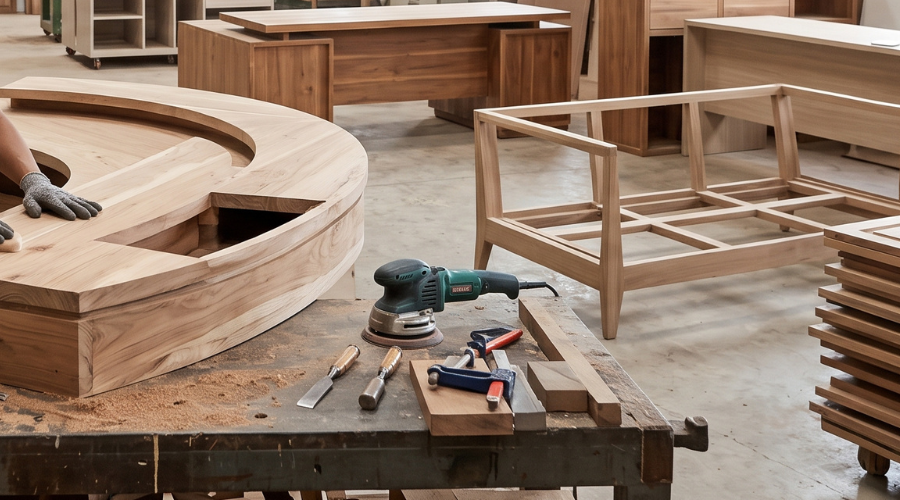
Furnishing a new office, hotel, or clinic often starts the same way. Someone browses a catalog and picks pieces that look close enough. Then the furniture arrives and doesn’t quite fit. A sofa sits a few centimeters too deep for the lobby corner. The chairs don’t match the brand’s material palette. Within a year, upholstery rated for light home use starts wearing out under daily commercial traffic. Custom furniture manufacturing exists to avoid exactly this mismatch. Plenty of businesses still default to off-the-shelf without weighing what they’re giving up.
What Is Custom Furniture Manufacturing?
Custom furniture manufacturing builds pieces to a project’s exact measurements, materials, and brand requirements. It skips the standard catalog entirely. It covers a single reception desk sized for an odd-shaped lobby. It also covers matching furniture across fifty identical hotel rooms. Off-the-shelf furniture, by contrast, comes in fixed sizes and finishes for a general market. It can work well for smaller budgets or simple spaces. It rarely suits a project with specific dimensions, brand standards, or heavy daily use to account for.
Real Benefits and Impact
The clearest benefit is fit. Custom pieces match the exact space, so no wasted corner or awkward gap ruins the layout. Durability improves too. Manufacturers choose materials for how the space actually gets used, not for a generic showroom setting. Custom manufacturing also keeps a brand consistent. A hotel chain or clinic network can match colors, materials, and finishes precisely across every location. That beats settling for whatever a catalog happens to stock that season. For large projects, this consistency matters more than most owners expect.
Evidence and Reference Standards
Commercial furniture procurement generally follows durability and load-testing standards well beyond typical residential ratings. Hospitality, healthcare, and office furniture faces far heavier daily use. A chair in a hotel restaurant gets used dozens of times a day, every day. Standard home-grade furniture usually can’t handle that. Lead time is the honest trade-off. Custom manufacturers build each piece to order instead of pulling stock from existing inventory, so custom projects simply take longer. Planning for that lead time upfront avoids delays later in a project.
After the Project: What to Prepare
Once the workshop delivers and installs custom furniture, keep the care instructions on hand for each material used. Custom finishes often need different cleaning approaches than store-bought pieces. It’s worth keeping supplier contact details on file too. You can’t simply reorder a custom piece from any retailer if a part needs replacing later. Warranty terms also deserve a close look. Coverage on custom commercial furniture can differ from standard retail return policies.
What to Realistically Expect
Custom furniture manufacturing costs more upfront than off-the-shelf and takes longer to deliver. That’s the honest trade-off. In return, the furniture fits the specific space and survives years of commercial-grade daily use. That usually means fewer replacements over time. For large projects, expect production and delivery in phases rather than all at once. This especially applies when a project needs dozens or hundreds of identical pieces.
Ready to Furnish Your Project?
If your commercial space needs furniture that actually fits, Intro Kreasi manufactures custom furniture for hotels, offices, and healthcare facilities across Indonesia from our workshop in Surabaya. Read also: Interior Design Budget: How to Plan and Avoid Overspending and How to Brief Your Interior Designer for the Best Results for more on planning ahead. Reach out through our contact page or WhatsApp at +62 813-2677-7097 to talk through what your project needs.