
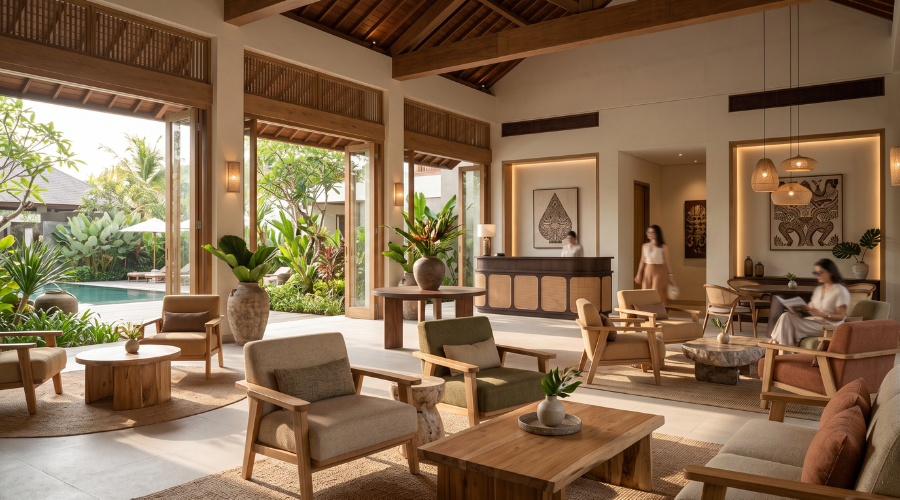
A guest forms an opinion of a hotel in the first thirty seconds. The lobby, the lighting, the way the space feels — it all lands before anyone says a word. Many properties look fine but forgettable. Nothing about the space says where guests are, or why this hotel differs from the one down the road. Poor space planning makes things worse. An awkward path between lobby, restaurant, and rooms creates friction guests feel without knowing why. Hotel and resort interior design exists to solve exactly this. It’s the difference between a guest who books once and a guest who comes back.
What Is Hotel and Resort Interior Design?
Hotel and resort interior design plans the layout, materials, lighting, and furniture across every guest-facing space in a property. That means the lobby, guest rooms, restaurant, pool deck, and everything in between. Good hospitality design balances three things at once. It needs a strong sense of brand identity. It needs real comfort for guests. And it needs a layout staff can actually work in efficiently. A beautiful lobby that slows down check-in isn’t good design. Neither is a room that looks stunning in photos but sleeps poorly.
Real Benefits and Impact
A memorable interior directly affects repeat bookings and online reviews. Guests remember how a space made them feel, and they write about it. Smart guest flow reduces bottlenecks at check-in and in the restaurant during peak hours. This matters more than most owners expect. A well-branded interior also helps justify a higher room rate. Guests associate design quality with overall value. Behind the scenes, staff move faster and serve guests better too. That happens when service areas match their actual daily workflow.
Evidence and Reference Standards
Hospitality research consistently links design quality to guest satisfaction scores and rebooking rates. Properties with a distinct sense of place tend to outperform generic competitors on review platforms. This holds even at similar price points. Material choices matter just as much in a tropical climate like Indonesia’s. Fabrics, finishes, and outdoor furniture all need to hold up against humidity and salt air. They also need to survive heavy daily use without looking worn within a year. Fire safety and durability standards for commercial hospitality spaces apply here too, and they shape which materials actually make sense for a given property.
After the Project: What to Prepare
Once a hotel or resort renovation wraps up, plan a short handover period before full operations resume. Housekeeping and maintenance teams need updated care instructions for new furniture and finishes. This matters most for upholstery or natural materials that need humidity-appropriate cleaning. It also helps to update housekeeping SOPs for any layout changes in guest rooms or public areas. Keep warranty documents and supplier contacts on file. Commercial furniture in a humid climate tends to need servicing sooner than furniture in a drier environment.
What to Realistically Expect
Hotel renovations rarely happen all at once. Most properties phase the work by wing or floor. This keeps rooms available and revenue flowing during the project. Timing matters too. Renovating around low season, rather than during peak travel months, avoids disrupting the guests who matter most to annual revenue. Once complete, don’t expect review scores to jump overnight. The real payoff builds gradually. Stronger guest feedback and higher repeat-booking rates typically show up over the following months, as more guests experience the new space.
Ready to Elevate Your Property?
If your hotel or resort is due for a refresh, Intro Kreasi designs and manufactures hospitality interiors for properties across Indonesia from our office in Surabaya. Read also: Restaurant and Cafe Interior Design: Setting the Right Mood and Interior Design Budget: How to Plan and Avoid Overspending for more on planning a project like this. Reach out through our contact page or WhatsApp at +62 813-2677-7097 to talk through what your property needs.