
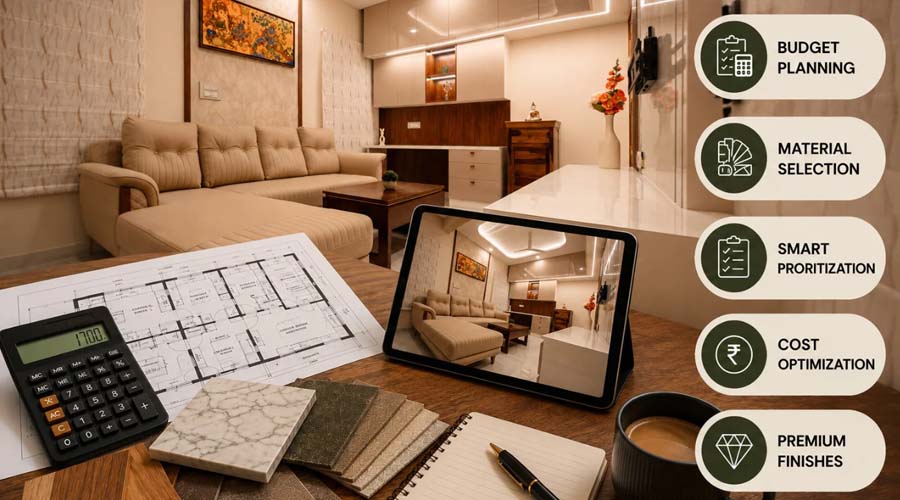
An interior design budget sets the foundation for nearly every decision that follows in a project, yet it’s often the part clients feel least equipped to plan properly. Without a clear budget framework from the start, it’s easy for costs to creep upward through small decisions that each seem reasonable in isolation but add up to a very different total than originally intended.
Understanding Where the Budget Actually Goes
A common misconception is that most of an interior design budget goes toward furniture and decor, when in reality, a significant portion often goes toward things that are far less visible — electrical work, plumbing adjustments, custom millwork, and labor. Structural or mechanical changes in particular can consume a large share of a budget quickly, especially in renovation projects where unexpected issues are discovered once walls or flooring are opened up.
Breaking a budget into categories — construction and structural work, furniture and fixtures, finishes and materials, and design fees — makes it much easier to see where money is actually being allocated, rather than working from a single lump sum that obscures where costs are concentrated.
Read more: Mixing Textures and Materials in Interior Design Projects
Setting a Realistic Budget From the Start
A realistic budget starts with being honest about priorities before any design decisions are made. Deciding in advance which elements matter most — whether that’s high-quality furniture, premium materials, or a larger scope of renovation work — helps guide where the budget should be concentrated and where it makes sense to economize.
It’s also worth building in a contingency of at least 10 to 15 percent above the planned budget, particularly for renovation projects. Unexpected discoveries once work begins — outdated wiring, water damage, structural issues — are common enough that a contingency isn’t a pessimistic add-on, but a realistic part of planning for a smooth project.
Common Ways Budgets Get Derailed
Scope creep is one of the most frequent causes of budget overruns, where small additions and changes accumulate gradually over the course of a project. A single extra light fixture or a slightly upgraded material choice might seem minor on its own, but a series of these small decisions can meaningfully shift a project’s final cost compared to the original plan.
Custom work is another common source of budget surprises. Bespoke furniture, custom cabinetry, and made-to-order finishes typically cost significantly more than off-the-shelf alternatives and often take longer to produce, which can also affect project timelines if not planned for early.
Prioritizing Spend Where It Matters Most
Not every element in a space deserves equal budget weight. Items that see heavy daily use — a sofa, a dining table, kitchen cabinetry — generally justify a larger portion of the budget, since their quality directly affects both daily comfort and how well they hold up over time. Decorative or easily replaceable items, on the other hand, are often reasonable places to save, since they can be upgraded later without a major project.
This kind of prioritization helps a budget stretch further without compromising the elements that actually matter most to how a space functions day to day.
Read more: How to Brief Your Interior Designer for the Best Results
Working With a Designer to Stay on Track
A clear budget conversation with your designer early in the process helps avoid mismatched expectations later on. Sharing a realistic number upfront, rather than an aspirational one, allows a designer to make recommendations that are genuinely achievable within your means, rather than presenting options that later need to be scaled back.
Regular budget check-ins throughout a project, rather than only reviewing costs at the very end, also make it easier to catch and adjust for overspending before it becomes a larger problem.
Planning a Budget That Actually Holds
A well-planned interior design budget isn’t about spending as little as possible — it’s about spending intentionally, with a clear sense of where money delivers the most value for your specific project. Understanding where costs typically concentrate, building in a reasonable contingency, and staying disciplined about scope are what separate a budget that holds from one that quietly unravels.
At Intro Kreasi, budget planning is part of the earliest project conversations, so decisions throughout the design process are made with a clear, shared understanding of what’s realistic rather than guesswork.